
GPT-4o retirement: what to check if your business uses it
OpenAI will retire GPT-4o and GPT-4.1 from its API on 14 January 2027. If a tool or automation in your business relies on them, here is what to check.

Blog · · 6 min · digizone team
The GPT-4o retirement now has a date: OpenAI will stop offering GPT-4o, GPT-4o mini, GPT-4.1 and GPT-4.1 mini through its API on 14 January 2027. If your business runs a chatbot, an automation or bespoke software built on any of those models, you have less than three months to switch it to another model and check it still works as before.
In short
- On 14 October 2026, OpenAI announced it will remove GPT-4o, GPT-4o mini, GPT-4.1 and GPT-4.1 mini from its API on 14 January 2027, according to its official deprecations page.
- Custom (fine-tuned) versions of those models shut down on the same day, and OpenAI recommends GPT-6 Luna as the replacement for all four models.
- The notice affects software that calls OpenAI through its API, such as chatbots, automations or bespoke integrations, not using ChatGPT in the browser.
- For a small business, the urgent step is knowing which of its tools use those models, who can change them, and testing the replacement on real cases before January.
What OpenAI has announced
On 14 October, OpenAI told developers using those models that they will be removed from its API, the doorway other software uses to plug into its artificial intelligence. Its official model deprecations page lists the affected versions and the shutdown date.
- Models affected: GPT-4o, GPT-4o mini, GPT-4.1 and GPT-4.1 mini, across five dated versions, according to OpenAI.
- Shutdown date: 14 January 2027. Fine-tuned versions of those models, the ones a company has trained on its own examples, follow the same schedule.
- Recommended replacement: GPT-6 Luna for all four models. According to DataNorth, GPT-6 Luna cannot be fine-tuned.
- Other retirements come first: under an April notice, gpt-4.1-nano and the May 2024 version of GPT-4o leave the API on 23 October 2026, according to the same OpenAI page.
The notice only covers the API. According to DataNorth, people who only use ChatGPT do not need to change anything because of it. For those who do switch models, Superpower Daily advises testing the replacement on representative requests and edge cases before making the move.
The order tool nobody quite understands

Imagine you run a family wine distributor with four people. Eighteen months ago, a freelance developer set up a small automation for you: it reads the order emails from bars and restaurants, works out which wines and how many cases they want, and adds them to the order sheet on its own. Since then, Elena, who runs the office, no longer copies every Monday morning order by hand.
It works so well that nobody thinks about it. The developer has moved on to another company. The OpenAI account sits under an email address nobody checks. And if someone asked Elena which AI model her automation uses, she would have no idea. That is not carelessness on her part: she has simply never needed to know.
Why do so many automations hang on a single model?
The scene is made up, but it looks a lot like many we come across. When someone connects a piece of software to OpenAI's AI, they write the exact name of the model into the code. During testing they pick whichever responds best that month, everything works and the project is signed off.
That name stays there, out of sight, while everything around it moves on. AI providers refresh their models often and retire the old ones with a notice period. OpenAI's own page has retirements scheduled on dates running from October 2026 to April 2027. Anyone building with AI is building on a part with a use-by date, even if they cannot see it.
The cost of finding out too late

The problem is not switching models, which is often straightforward. The problem is finding out on the day it stops working. At Elena's distributor, that could be a Monday in January with orders missing from the sheet, deliveries waiting to be packed and nobody sure where to start looking.
And even when the switch happens in time, a new model does not always behave like the old one. It might read an order differently, take longer or cost a different amount. If nobody tests it on real emails, a mistake can go unnoticed for weeks, quietly logging the wrong quantities.
What should you do about the GPT-4o retirement?
If anything in your business runs on AI, you can work through these steps calmly before January:
- List everything that uses AI behind the scenes: the chatbot on your website, email automations, reports that build themselves, links to your management software.
- Find out which model each one uses. Whoever built it will know, and it also shows up in your company's OpenAI account dashboard.
- Check that the account belongs to someone on the team and that OpenAI's notices reach an inbox someone actually reads.
- Gather twenty or thirty real cases, including the awkward ones: the order full of typos, the one mixing two customers, the one sent as an attachment.
- Test the replacement on those cases and compare its answers with the current model's before switching over for day-to-day work.
- Note down which model each tool uses and a date to review it, so the next retirement does not catch you out.

At the distributor, the test could be as simple as running a month of orders through the new model and comparing the resulting sheet with the one they already have. If it matches, they switch. If not, there is time to adjust the instructions before January.
How we help at digizone
When we take on web app and bespoke software development, the parts that run on their own are part of the product from day one: they are documented, they live in the client's own infrastructure and they can be reviewed and changed without rebuilding anything. And if you already have an automation someone else built, we can go through it with you, find out which model it uses and plan the switch calmly.
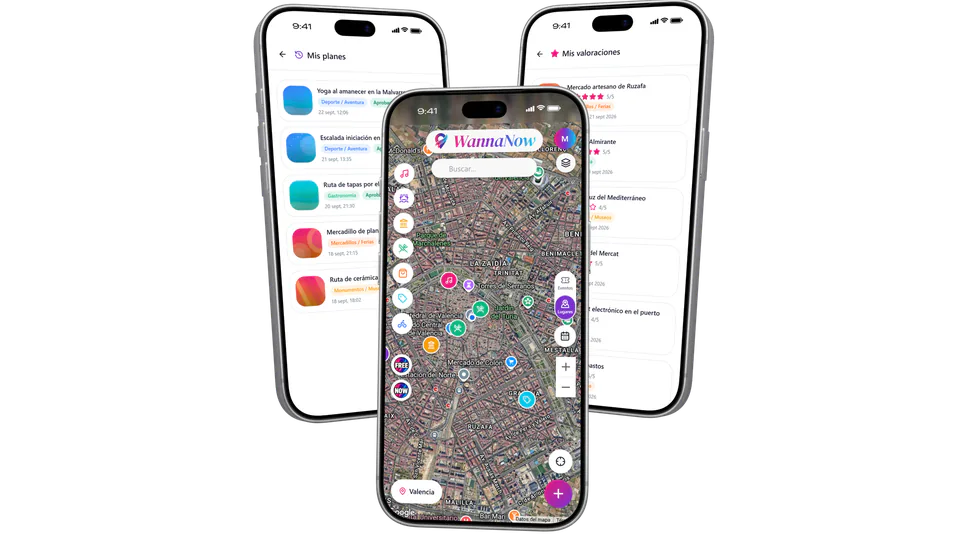
For WannaNow, we built an importer that trawls the city's public listings every day, standardises each event, categorises it and places it on the map with no human involvement. We built it on Supabase, with scheduled tasks inside the database itself. That way, the job that runs on its own every day lives inside the system itself.
Start with a list of your automations
You do not need to rebuild anything to have peace of mind. The first version of this job is a simple list: which tools use AI, which model each one runs on, who looks after it and when it gets reviewed. At Elena's distributor, it would be a single row for the order automation. With that list in place, January's retirement becomes just another date in the diary.
If you would like to see how it would work for you, our free workshop, in Spanish, walks through it step by step.
Frequently asked questions
When does GPT-4o stop working in the OpenAI API?
According to OpenAI's official deprecations page, GPT-4o, GPT-4o mini, GPT-4.1 and GPT-4.1 mini will be removed from the API on 14 January 2027. The notice went out on 14 October 2026. Fine-tuned versions of those models shut down on the same day, and some older versions, such as gpt-4.1-nano, leave earlier, on 23 October 2026.
Does this affect me if I only use ChatGPT?
This OpenAI notice covers the API, the connection that software, chatbots and automations use to talk to its models. According to DataNorth, people who only use ChatGPT in the browser or on their phone do not need to change anything because of this retirement. It is worth checking any business tool that connects to OpenAI on its own, though.
How do I find out which model my automation uses?
The model name is written into the tool's settings or code, so whoever built it can tell you in minutes. You can also look at your company's OpenAI account dashboard, which shows usage by model. If nobody has access to that account, that is the first problem worth sorting out.
Is it enough to swap the model name for GPT-6 Luna?
Sometimes, but it is best not to assume so. A new model may read instructions differently, respond at a different speed or cost a different amount. The sensible approach is to gather real cases, including the tricky ones, run them through GPT-6 Luna and compare the results with the current model's before using it for everyday work.
Will this happen again with other AI models?
Yes. AI providers refresh their models frequently and retire the old ones with a notice period; OpenAI's page already lists retirements scheduled up to April 2027. That is why it helps to keep a note of which model each tool uses, who maintains it, and to make sure provider notices reach an inbox someone reads.
Sources
About digizone
digizone is a custom software development company founded in 2019, with offices in Barcelona and Cartagena (Spain). We design and build mobile apps, web applications, CRM/ERP systems and AI automation for startups, SMEs and enterprises. Meet the team

Other articles
Don't get left behind: if you want to keep up to date with the fast-moving technology sector, take a look at the following articles:

Measuring AI return in hours saved alone falls short
A Wharton and GBK study finds strong AI returns far more often where firms track growth, not just hours saved. Here is what to measure in your business.
Read more »
Gemini skills: write down once how your team works
Google is replacing Gems with skills, saved instructions Gemini reuses with a slash. They are a chance to write down how your best person does the job.
Read more »
ChatGPT watermark in the EU: what it means for your firm
OpenAI is adding an invisible watermark to ChatGPT text in the EU. Why what matters for your business is who checks what you publish, not the mark itself.
Read more »Contact us
Do you have any questions? Would you like to schedule a call or a meeting? We would be happy to address any concerns and start working with you. The perfect digital solution for your business is just around the corner.
Subscribe to the newsletter
Discover the digital future by subscribing to our exclusive newsletter! Stay updated on the latest trends and developments in the world of technology. Don't miss the chance to be the first to learn about the innovations that are transforming the present! Subscribe now.