
PHP vulnerability: what to check if you use WordPress
PHP has fixed two critical flaws, found with the help of AI, that let attackers take over a website. What to ask your hosting provider today if you use WordPress.

Blog · · 6 min · digizone team
A PHP vulnerability, in the language that powers WordPress and many other websites, means your business website needs checking today. On 21 October, a patch was released for two critical flaws that let an attacker take over the server with a single request and no password. If your business has a website, an online shop or a form built with PHP, it is worth confirming it has already been updated.
In short
- On 21 October 2026, PHP fixed two critical flaws, PHP2Shell, that let anyone run code on a website's server without a password, according to the US agency CISA.
- The fixed versions are PHP 8.5.12, 8.4.27, 8.3.36 and 8.2.35; versions 8.1 and earlier no longer have official support, according to Help Net Security.
- Wiz, the security firm that disclosed them, says it used AI models to find them and to build the attack, and that it demonstrated it against WordPress, Drupal and Joomla.
- For a small business with its own website, the urgent step is to ask its hosting provider which PHP version it runs and whether the patch is in, and to put in writing who updates the site.
What happened with PHP
The two flaws, logged as CVE-2026-109618 and CVE-2026-109619 and nicknamed PHP2Shell, allow remote code execution without logging in, according to the CISA alert, from the US cybersecurity agency. They affect every PHP installation that serves web pages, and on 26 October CISA added them to its catalogue of vulnerabilities that are already being exploited.
What sets this story apart is the part played by artificial intelligence. The researchers at Wiz say they used AI models such as Google's Gemini, among other tools, to find the flaws, adapt the attack to different versions and check the patch, and that they demonstrated the attack against the latest versions of WordPress, Drupal and Joomla. By their account, a single researcher did in a week what would once have taken a top-tier team months.
- Fixed versions: PHP 8.5.12, 8.4.27, 8.3.36 and 8.2.35, according to CISA.
- Unsupported versions: PHP 8.1 and earlier no longer get official updates; for 7.4, 8.0 and 8.1 there are minimal fixes for those who build PHP themselves, according to Help Net Security.
- Attacks: Amazon spotted an attempt to exploit the flaw on 17 October, four days before it was made public, reports Help Net Security.
- Reach: Wiz says PHP runs 70% of the world's websites, a figure it gives without saying where it comes from.
A tutoring school that didn't know it used PHP

Imagine Rocío runs a tutoring school with two teachers. Her website was built a few years ago: timetables, an enrolment form and fee payments. It works, parents use it, and the hosting renews itself every year on the school's card.
One Tuesday, between lessons, a friend forwards her an article about a serious flaw in PHP. Rocío reads it twice. She has no idea whether her site uses PHP, she can't remember the password for the hosting panel and she isn't sure who to call. All she knows is that the form holds the names, phone numbers and payment details of families who trust her.
Why do so many websites go without updates?
The scene is made up, but it looks a lot like many we come across. A website gets commissioned, delivered and celebrated. After that it becomes like the office router: it sits there, it works, and nobody looks at it until something breaks.
The catch is that every website rests on parts that age even if nobody touches them: the PHP language, the content management system, the plugins. CISA itself points out that PHP often comes bundled inside other software, so it is not always obvious that it is there. If the contract doesn't say who updates those parts, the usual outcome is that nobody does.
What is at stake if your site goes unpatched?

Until now, there was usually some time between a flaw being found and someone exploiting it. With AI, that window is narrowing from both sides: the same models that help find a flaw help build the attack. In this case, the first known attempt came before the public warning.
For a small business, the risk is far from abstract. Wiz showed the flaw could also be used to read the server's memory, which may hold passwords and keys. A compromised website can mean customer data out in the open, days without taking payments online and awkward conversations with people who trusted you with their details.
What should I do if my site has the PHP vulnerability?
You don't need to know how to code to take the first steps. These are the ones we would take with any client:
- Ask your hosting provider today, in writing, which PHP version your site runs and whether it already has the 21 October patch.
- If the answer is PHP 8.1 or earlier, ask for a plan to upgrade: it is no longer supported, and CISA recommends taking offline any system that cannot be updated straight away.
- If your site sits behind Cloudflare, bear in mind it has switched on protection rules for all its customers, according to Help Net Security; they are a stopgap, not a substitute for the update.
- If your site has been exposed, consider changing the passwords and keys it stores, such as those for your payment gateway or email.
- Put in writing who updates the site, how often, and how they will let you know when an urgent patch comes out.

That last point is the one most often forgotten, and the one that matters most next time. This won't be the last serious flaw that AI turns up, and the gap between a scare and a real problem usually comes down to how quickly you react.
How we help at digizone
At digizone we sit down with each business to see what software it really uses, what parts it depends on and who looks after each one. Through our technology consulting we help you map all that out, deal with what is urgent first and decide what is worth keeping, updating or rebuilding.
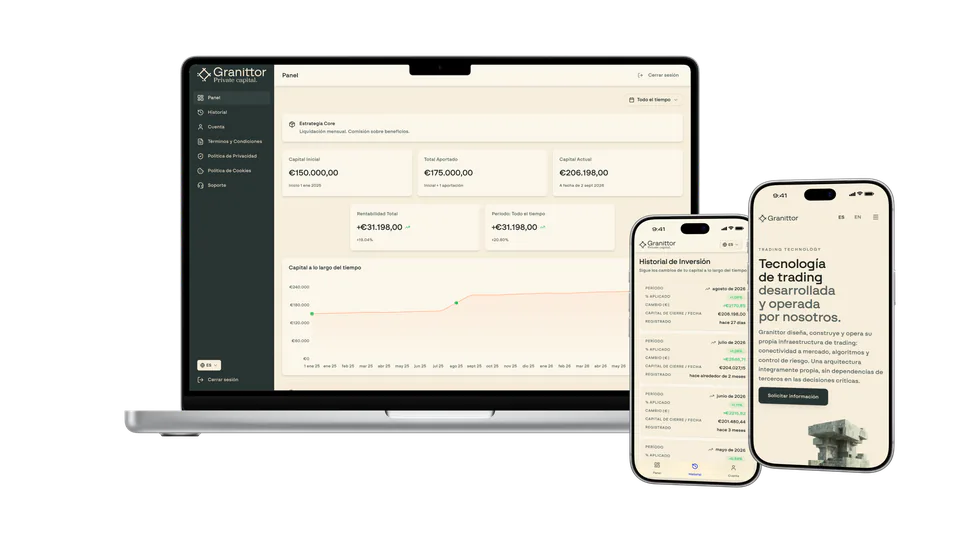
When we build something, security is part of the design from day one. For Granittor we developed a client platform with sign-in by password or by passkey with Face ID and Touch ID, and row-level security on every table so that each user sees only what is theirs.
Start by knowing who looks after your website
You don't need a grand cybersecurity plan to get going. At Rocío's school, the first version would be a single page: which PHP version the site runs, who updates it, where the backups are and who to call if something goes wrong. That way, when the next warning arrives, Rocío will have the version and the number of whoever has to update it to hand.
If you would like to see how it would work for you, our free workshop, in Spanish, walks through it step by step.
Frequently asked questions
What is PHP2Shell?
It is the name given to two critical flaws in PHP, logged as CVE-2026-109618 and CVE-2026-109619. They let an attacker run code on a website's server without a username or password. PHP released the fix on 21 October 2026, and the US agency CISA added them on 26 October to its list of flaws that are already being exploited.
How do I know if my website uses PHP?
If your site is built with WordPress, Drupal or Joomla, it uses PHP. Otherwise, the quickest way is to ask your hosting provider or whoever built the site. Ask in writing which PHP version is installed and whether it already includes the 21 October fix. Many hosting panels also show the version in their settings.
Which PHP versions are fixed?
According to CISA, the fixed versions are PHP 8.5.12, 8.4.27, 8.3.36 and 8.2.35. Versions 8.1 and earlier no longer have official support, according to Help Net Security, and CISA recommends taking systems on those versions offline if they cannot be updated straight away. If your site runs an old version, ask your provider for an upgrade plan.
Is updating WordPress and its plugins enough?
No. The flaw is in PHP, the language WordPress runs on, not in WordPress or its plugins. PHP has to be updated on the server, which is usually done by the hosting provider or whoever manages the server. Keeping WordPress and plugins up to date is still good practice, but on its own it does not fix this problem.
What does artificial intelligence have to do with this flaw?
The security firm Wiz says it used AI models such as Google's Gemini, among other tools, to find the flaws, adapt the attack to different versions and check the patch. By its account, a single researcher did in a week work that would once have taken months. That means flaws are found sooner, and can also be exploited sooner.
Sources
About digizone
digizone is a custom software development company founded in 2019, with offices in Barcelona and Cartagena (Spain). We design and build mobile apps, web applications, CRM/ERP systems and AI automation for startups, SMEs and enterprises. Meet the team

Other articles
Don't get left behind: if you want to keep up to date with the fast-moving technology sector, take a look at the following articles:

AI shopping agents: your shop has to be readable too
Walmart is opening its store to AI shopping agents that search and buy for customers. What it means for a small online shop and what to check on your site.
Read more »
GPT-4o retirement: what to check if your business uses it
OpenAI will retire GPT-4o and GPT-4.1 from its API on 14 January 2027. If a tool or automation in your business relies on them, here is what to check.
Read more »
Measuring AI return in hours saved alone falls short
A Wharton and GBK study finds strong AI returns far more often where firms track growth, not just hours saved. Here is what to measure in your business.
Read more »Contact us
Do you have any questions? Would you like to schedule a call or a meeting? We would be happy to address any concerns and start working with you. The perfect digital solution for your business is just around the corner.
Subscribe to the newsletter
Discover the digital future by subscribing to our exclusive newsletter! Stay updated on the latest trends and developments in the world of technology. Don't miss the chance to be the first to learn about the innovations that are transforming the present! Subscribe now.