
Only 4.1% of Spain's industrial SMEs use AI: how to start
The IndesIA Barometer 2026 finds that just 4.1% of Spain's industrial SMEs use artificial intelligence. What it means and where to start.
Blog · · 5 min · digizone team
Only 4.1% of Spain's industrial SMEs use artificial intelligence, according to the IndesIA Barometer 2026, presented in Madrid on 1 October. That is double the figure of two years ago, yet it leaves almost 96 in every 100 out. For a small company, the practical reading is that AI for SMEs does not start with a big project: it starts with one specific process and a first version that works.
In short
- Only 4.1% of Spain's industrial SMEs use AI, according to the IndesIA Barometer 2026; in 2024 it was 2.1%.
- The smaller the company, the less AI: 6.5% of medium-sized firms, 5.1% of small ones and 3.6% of micro-enterprises.
- Having a tool is not enough: results come from changing one specific process.
- You do not need a big project to start: one process that hurts, the data you already have and a first version.
What the IndesIA Barometer 2026 says
IndesIA is an association that promotes the use of data and artificial intelligence in Spanish industry. This year's barometer, built on a sample of 131,554 companies, puts AI use at 4.1% of industrial SMEs, up from 2.9% in 2025 and 2.1% in 2024, as reported by El Español.
Size matters. AI is present in 6.5% of medium-sized companies (50 to 250 employees), 5.1% of small ones (10 to 50) and 3.6% of micro-enterprises. By region, Madrid leads with 6.3%, followed by Catalonia with 4.9% and the Basque Country with 4.2%, according to Conecta Industria.
At the forum where the barometer was presented, Lieven Van der Veken of QuantumBlack, McKinsey's AI arm, shared another figure, this one about organisations in general: 89% have adopted AI in at least one function, but only 6% see a real impact on their results, Conecta Industria reports. Having a tool is not the same as changing how the work gets done. The barometer also shows where the technology is heading: generative AI and decision automation are gaining ground over classic machine learning solutions, La Ecuación Digital notes.
An ordinary Tuesday in a twenty-person company

Imagine you run a machining company with twenty people. Orders come in by email, by phone and over WhatsApp, and someone copies them into a spreadsheet. Quotes are always prepared by the same person, because nobody else knows what each part costs, and that person spends half the day on the shop floor.
A customer asks for a price on Monday and gets it on Wednesday. Sometimes, by then, they have already bought elsewhere. You have read about artificial intelligence and assumed it was for companies with a data department. Then the phone rang and you left it for another day.
Why doesn't AI reach small companies?
The scene is not any one company, but many will recognise it. In a small business the day-to-day swallows everything. Nobody has a free afternoon to think about how the company should run two years from now, because this week's order has to go out.
On top of that come three beliefs that hold people back: that AI demands a huge investment, that you need perfect data, and that everything has to change at once. None of the three is true, but any one of them is enough to put the decision off. The barometer points the same way: the smaller the company, the less AI is present.
What staying the same costs
Staying the same is not free. It is hours every week copying data from one place to another. It is quotes that arrive late. It is knowledge that lives in one person's head and goes on holiday with them.
And there is a cost you do not see until it is too late: the company next door that did take the step and answers in an hour what takes you two days. Today it is 4 in every 100. Two years ago it was 2.
Where does an SME start with AI?
Not with the technology, but with a problem. The tasks that suit it best are repetitive and work with text or documents: reading orders, preparing quotes, answering the same customer questions, searching technical documentation, writing reports. The order that works best is this:
- Pick a single process that repeats every week and hurts: quotes, orders, customer service, documentation.
- Look at the data you already have. Emails, spreadsheets and your management software are usually enough to begin.
- Build a first version that solves only that, together with the people who do that work today.
- Measure the result in something you understand: hours saved, response time, errors.
- Once it works, move on to the next process.
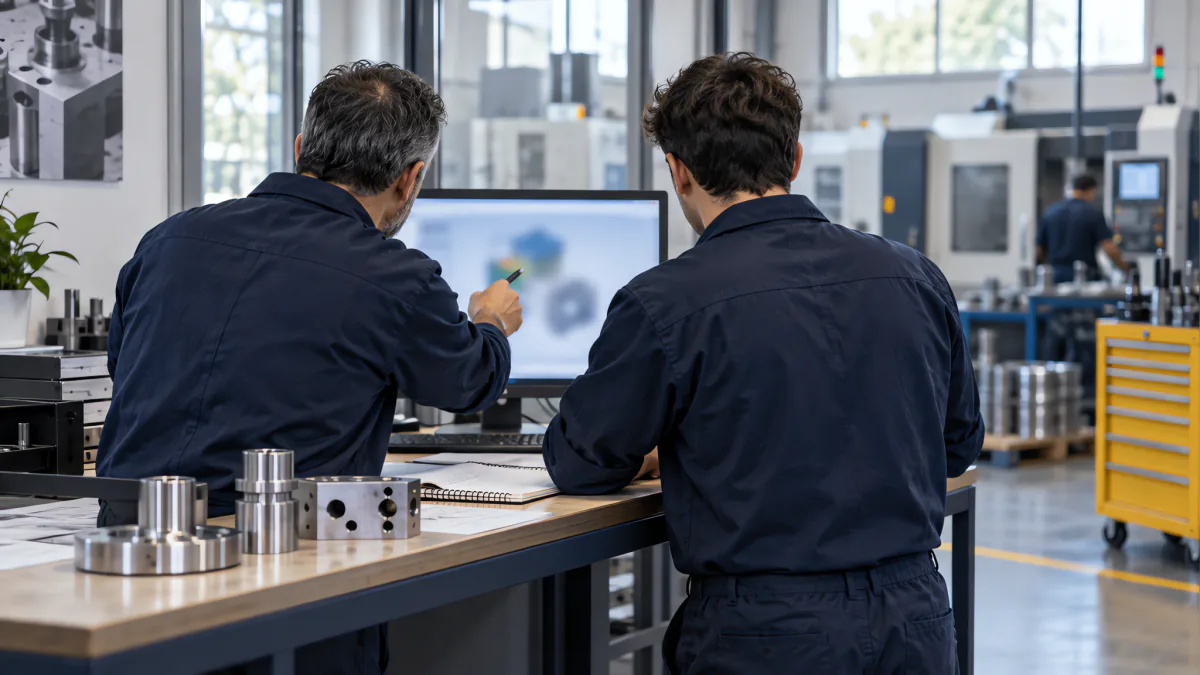
In the machining company, that first version could read the orders that arrive by email, draft the quote from previous ones and leave it ready for a person to review and send. The decision still belongs to a person. What disappears is the copying and the searching.
How we help at digizone
At digizone we design and build custom software, and we take care of implementing artificial intelligence in companies: understanding the process, deciding what is worth automating and building it to fit the tools you already use. That is the difference between having a tool and feeling the result.
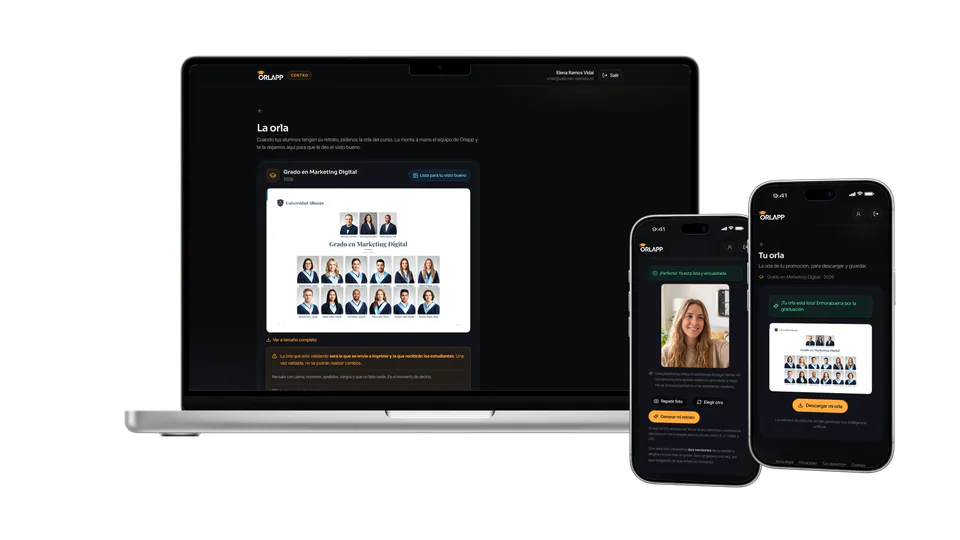
A recent example is Orlapp, a platform for graduation class composites. It started from a process that relied on in-person photo shoots, emails and a great deal of manual work. Today every student gets an AI-generated portrait from a selfie, and what used to be in-person and manual is a digital flow you reach from your phone. It is a different sector, but the starting point was the same as any SME's: a manual process someone decided to rethink.
Start with a first version
We call that first version an MVP, a minimum viable product: the smallest thing that already solves a real problem. It is not a mock-up to show around. It is something you use from day one and that grows with what you learn.
What matters is to start with something and scale it from there. The 96% that still does not use AI does not need a five-year plan. It needs one process solved.
If you would like to see how it would work for you, our free workshop, in Spanish, walks step by step through building an MVP in four weeks.
Frequently asked questions
How many industrial SMEs use artificial intelligence in Spain?
According to the IndesIA Barometer 2026, 4.1% of Spain's industrial SMEs use artificial intelligence, up from 2.9% in 2025 and 2.1% in 2024. By size, AI is present in 6.5% of medium-sized companies, 5.1% of small ones and 3.6% of micro-enterprises. The study is based on a sample of 131,554 companies.
What does an SME need to start using AI?
One specific process that repeats and eats up time, the data it already produces day to day (emails, spreadsheets, management software) and a small first version that solves only that process. You do not need a data department or to replace all your tools. You do need the people who do that work today to take part.
Which processes should be automated first with artificial intelligence?
Repetitive ones that work with text or documents: reading and logging orders, preparing quotes, answering frequent customer questions, searching technical documentation or writing reports. These are tasks where AI can save hours from the start and where a person can review the result before signing it off.
How much does it cost to implement AI in a small company?
It depends on the process and on how connected it has to be to the rest of your tools. That is why it pays to begin with a narrow first version, an MVP: the investment is smaller, the result shows quickly and the decision to keep expanding is made with real data from your own company, not with estimates.
What is an MVP and why is it a good way to start with AI?
An MVP, or minimum viable product, is the smallest version of a solution that already solves a real problem and can be used from day one. It is a good way to start with AI because it limits the risk: it is built quickly, tested on real work and expanded only where it proves it works.
Sources
- La IA apenas llega al 4,1% de las pymes industriales españolas pese a duplicar su adopción desde 2024 — El Español (in Spanish)
- El 96% de las pymes industriales españolas todavía no usa inteligencia artificial — Conecta Industria (in Spanish)
- La IA alcanza al 4,1% de las pymes industriales españolas — La Ecuación Digital (in Spanish)
- IndesIA urge a acelerar la adopción de la IA y a convertir su potencial en resultados e impacto real — Forbes España (in Spanish)
About digizone
digizone is a custom software development company founded in 2019, with offices in Barcelona and Cartagena (Spain). We design and build mobile apps, web applications, CRM/ERP systems and AI automation for startups, SMEs and enterprises. Meet the team

Other articles
Don't get left behind: if you want to keep up to date with the fast-moving technology sector, take a look at the following articles:

How mobile apps improve your business performance
Businesses in this era are increasingly turning their attention towards mobile apps for the improvement of their business process, overall performance, and customer engagement.
Read more »
How to define your target audience and get it right
Following the social media revolution, companies are now closer than ever to communicating with the right audience in the easiest and most effective way.
Read more »
The importance of push notifications
We are in front of the time where we receive too many communications from different companies, added to our own contacts. Push notifications stand out.
Read more »Contact us
Do you have any questions? Would you like to schedule a call or a meeting? We would be happy to address any concerns and start working with you. The perfect digital solution for your business is just around the corner.
Subscribe to the newsletter
Discover the digital future by subscribing to our exclusive newsletter! Stay updated on the latest trends and developments in the world of technology. Don't miss the chance to be the first to learn about the innovations that are transforming the present! Subscribe now.