
Your business listing in ChatGPT: what changes for SMEs
OpenAI now lets businesses claim their ChatGPT listing, correct their details and see how often they are mentioned. What to check before customers ask.

Blog · · 6 min · digizone team
Your business listing in ChatGPT can now be claimed: on 10 November OpenAI launched a beta that lets a verified company correct the details the assistant uses about it and see how often it is mentioned. For a small business, what ChatGPT says about you is no longer something you can only watch from the outside.
In short
- On 10 November 2026 OpenAI launched Businesses in ChatGPT in beta: eligible businesses can claim and verify their listing and update their details.
- According to PYMNTS, the listing shows aggregated data: how often the business appears in answers, clicks to its website and the conversation topics it comes up in.
- Each business's own agent inside ChatGPT is, for now, only available to eligible ecommerce and online service businesses in the United States.
- Claiming the listing does not guarantee a higher placement or more sales, according to Unite.AI; what you can do today is ask ChatGPT about your business and fix what is wrong on your website.
What Businesses in ChatGPT is
It is called Businesses in ChatGPT and comes in two parts, according to PYMNTS. The first is Business Hub, a dashboard where a company claims and verifies its listing, updates its information and, if it sells products, adds a feed with prices and availability. Shopify merchants can connect their store.
The second is Business Agents: a business's own assistant that customers can talk to separately, inside ChatGPT, to ask about its products or services. For now these are only open to eligible ecommerce and online service businesses in the United States; OpenAI says it will expand to more markets and categories.
The listing itself is not limited to the US. According to Unite.AI, eligible businesses can claim it wherever ChatGPT is available, and at first only those with a website; a Shopify store is not required. Let's Data Science adds that OpenAI decides who can join the beta based on industry, location and its own verification checks. A claimed listing carries a blue tick, but claiming it does not guarantee a higher placement or more sales.
What is new for a business owner is the data. Business Hub shows aggregated figures, among others: how often your business appears in answers, clicks to your website and the conversation topics you come up in. They only show once there are enough conversations, and the business never sees anyone's chats.
A Sunday with the shutter down

Imagine Begoña runs a neighbourhood florist's with her brother. They open Monday to Saturday and, for the past two years, have also made wedding arrangements to order. One Sunday evening a customer messages her: she is standing outside the closed shutter. She had asked an AI assistant for a florist open nearby, and it suggested Begoña's, with opening hours that stopped being true a long time ago.
Begoña goes looking for where those hours came from. They are on a page of her website she made years ago and nobody has touched since. Her site says nothing about weddings either, which now make up half of her orders.
Why do assistants repeat old facts about your business?
Because an AI assistant answers with whatever it finds published about you, and in many small businesses that was written once and left alone. The website was built by someone who has since moved on, the hours changed over the summer and the new service only exists on Instagram or in the head of whoever handles it.
And some customers no longer search Google and compare three websites: they ask an assistant and go with the answer. According to OpenAI, as cited by Unite.AI, ChatGPT reaches 1.2 billion people every week. Questions like “where can I buy”, “who can do this for me” or “what time does it open” get answered there, sometimes without a visit to your website.
What a wrong answer costs you

A wrong detail gives no warning. Begoña's customer did not ring to complain; she messaged in good faith, but someone else would simply have gone to another florist. And anyone asking about wedding flowers who does not see you in the answer has no idea you exist.
That is what Business Hub data is for, once it reaches a business like yours: seeing whether you are mentioned and for what. If you are named for something you no longer do and never for what sells best, that is your clue.
What can you do today about your business listing in ChatGPT?
You do not need a claimed listing to get started. The first step is knowing what is being said about you, and you can check that this week:
- Ask ChatGPT about your business the way a customer would: opening hours, where you are, what services you offer and what the usual job costs.
- Note every detail that is wrong or missing, and look for where it might come from on your website or social media.
- Fix your website first: it is your source and the one you control. Make sure your hours, area and services are written down and up to date.
- If you are eligible, claim and verify your listing in Business Hub and review your details there.
- Once you have data, check each month which topics you are mentioned for and compare them with what you actually want to sell.

In Begoña's case the list of mistakes would fit on half a page: old opening hours and a missing service. Fixing them on the website is what gives the next answer a chance of being right.
Your details, current and in one place
Before changing anything, we get to know your business: what you sell, to whom and how a customer finds you today. With that clear, we tidy up the information you publish and build whatever is needed to keep it current without relying on anyone's memory. That is the work of our technology consulting.
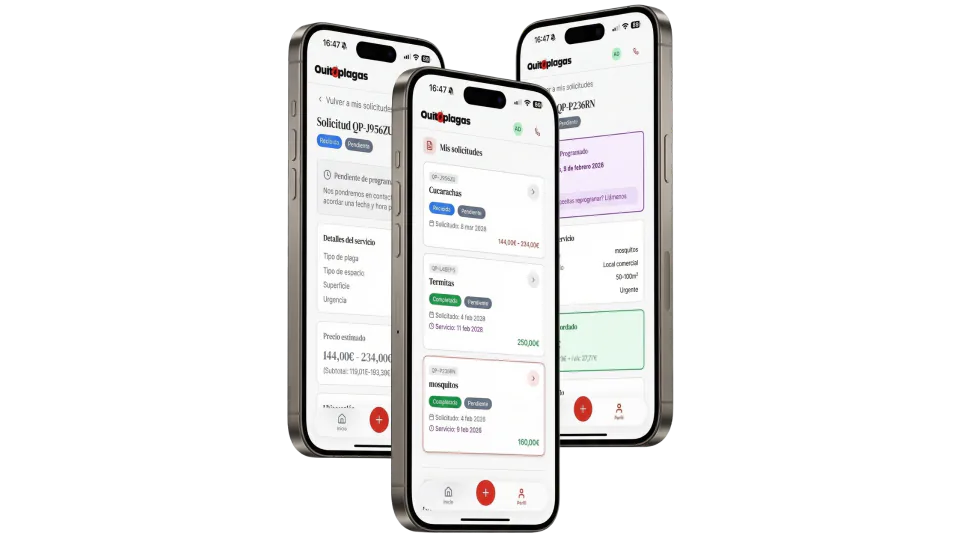
We saw it with Quitaplagas. Many of its service requests relied on phone calls and writing details down by hand, and information got lost. We built an app that guides customers through requesting a service, even in an emergency, and an internal dashboard to organise and prioritise every request. First contact now arrives with clear, well-organised information, which is what we aim for with everything you publish.
Where Begoña would start
You do not need to rebuild your website or set up an agent to begin. For Begoña, the first version would be one page with her real opening hours and another describing her wedding arrangements, both well written. The verified listing can come next, and its data will show you what else is worth changing.
If you would like to see how it would work for you, we walk you through it step by step (in Spanish).
Frequently asked questions
What is Business Hub in ChatGPT?
It is the dashboard of Businesses in ChatGPT, a beta OpenAI launched on 10 November 2026. From there, an eligible business claims and verifies its listing, updates its information and, if it sells products, adds a feed with prices and availability. It also shows aggregated data, such as how often the business appears in answers.
Can a business in Spain claim its listing in ChatGPT?
According to Unite.AI, eligible businesses can claim it wherever ChatGPT is available, and at first only those with a website. According to Let's Data Science, OpenAI decides who joins the beta based on industry, location and its own checks. Business Agents, on the other hand, are for now only available to eligible ecommerce and online service businesses in the United States.
Does claiming my listing make ChatGPT recommend me more?
No. According to Unite.AI, a claimed listing carries a blue tick, but claiming it does not guarantee a higher placement or more sales, and ChatGPT keeps making its recommendations independently. What it does give you is the chance to correct your details and see, in aggregate, how often you are mentioned and for which topics.
Can my business see what customers ask ChatGPT?
No. OpenAI says businesses do not see users' conversations or their chats with the business's agent. They only get aggregated data, such as mentions in answers, clicks to their website and the topics they appear in, and only once there are enough conversations; OpenAI says this is designed to protect user privacy.
Sources
About digizone
digizone is a custom software development company founded in 2019, with offices in Barcelona and Cartagena (Spain). We design and build mobile apps, web applications, CRM/ERP systems and AI automation for startups, SMEs and enterprises. Meet the team

Other articles
Don't get left behind: if you want to keep up to date with the fast-moving technology sector, take a look at the following articles:

Building internal tools with AI: who gets to see what
Cursor now publishes the apps you describe behind a link, with a database and sign-in. What it means for a small firm and what to decide before adding client data.
Read more »
Integrate your app with Siri: what Siri AI changes
Apple has opened Siri AI to any developer's app. What changes, when it arrives, why the EU is still waiting and which tasks in your app to get ready first.
Read more »
Robots.txt for AI: decide if models train on your site
Google plans to honour a shared robots.txt signal in 2027 that says whether your site can be used to train AI. What changes and how to decide what to open up.
Read more »Contact us
Do you have any questions? Would you like to schedule a call or a meeting? We would be happy to address any concerns and start working with you. The perfect digital solution for your business is just around the corner.
Subscribe to the newsletter
Discover the digital future by subscribing to our exclusive newsletter! Stay updated on the latest trends and developments in the world of technology. Don't miss the chance to be the first to learn about the innovations that are transforming the present! Subscribe now.