
What is hybrid application development?
What is a hybrid application? A hybrid application is essentially a web app, but with a native app 'container' that allows it to run on any device.

A hybrid application is essentially a web app, but with a native app "container" that allows you to take advantage of certain features of the native platform and device hardware. For example, with hybrid application development, you'll be able to access a mobile camera, calendar, push notifications, among others that a web app would not be able to access.
Like web apps, hybrid apps are built with commonly used front-end technologies and development languages such as JavaScript, HTML5 or CSS, which gives them cross-platform functionality.
A hybrid application is essentially a web app, but with a native app "container" that allows you to take advantage of certain features of the native platform and device hardware. For example, with hybrid application development, you'll be able to access a mobile camera, calendar, push notifications, among others that a web app would not be able to access.
Like web apps, hybrid apps are built with commonly used front-end technologies and development languages such as JavaScript, HTML5 or CSS, which gives them cross-platform functionality.
Hybrid apps are available through app stores, can be accessed from your mobile and are installed, just like a native app. But how do they compare to native and hybrid apps, and what are their advantages?
Native vs. hybrid app
The main difference between native and hybrid apps is that native apps are built from the ground up for a specific operating system, while hybrid apps are built to support multiple platforms.
Overview of native apps:
- Built for a specific mobile operating system (e.g. Apple iOS, Android).
- Have access to all advanced native features of the target mobile device.
- Better performance and security.
- Need to re-code in a different language to port to a different device ecosystem.
- Easier to comply with Apple App Store or Google Play shop requirements.
- More expensive to develop.
Overview of hybrid applications:
- Built with web technologies (e.g. HTML, CSS and JavaScript).
- Can achieve native performance with frameworks such as React Native.
- Achieve higher developer productivity through cross-platform compatibility.
- Lower development costs than native apps.
- Support enough native features to run offline.

Examples of hybrid applications
While early hybrid applications were quite slow, advances in web technologies and frameworks have narrowed the gap between hybrid and native performance. Some examples of high-performance hybrid applications include:

- Gmail – Angular: Yes, the most popular email client is technically a hybrid app.
- Twitter – React Native: Twitter boasts of its front-end technology stack with Node.js, Express and React Native.
- Instagram – React Native: Instagram's timeline is technically a web view. The most popular social media platform is built with React Native.
- Uber – React Native: Uber uses Base, a React UI framework for the front-end of its mobile apps.
- Untappd – React Native: The famous beer rating app runs on Ruby on Rails and other web technologies.
Advantages of hybrid apps
- Cross-platform compatibility: Hybrid app frameworks allow developers to use a common code base on both Android and iOS devices.
- Shorter development time: Increased code reuse reduces the development time.
- Scalability: A single code base and cloud-native web technologies make it easier for developers to scale their applications.
- Cost-effectiveness: Significant development cost savings in creating multiple versions.
- Bridges can be used to make hybrid/native mixes: When you scale a product, what will be done is to code in native and "join" it with the hybrid by means of a bridge.
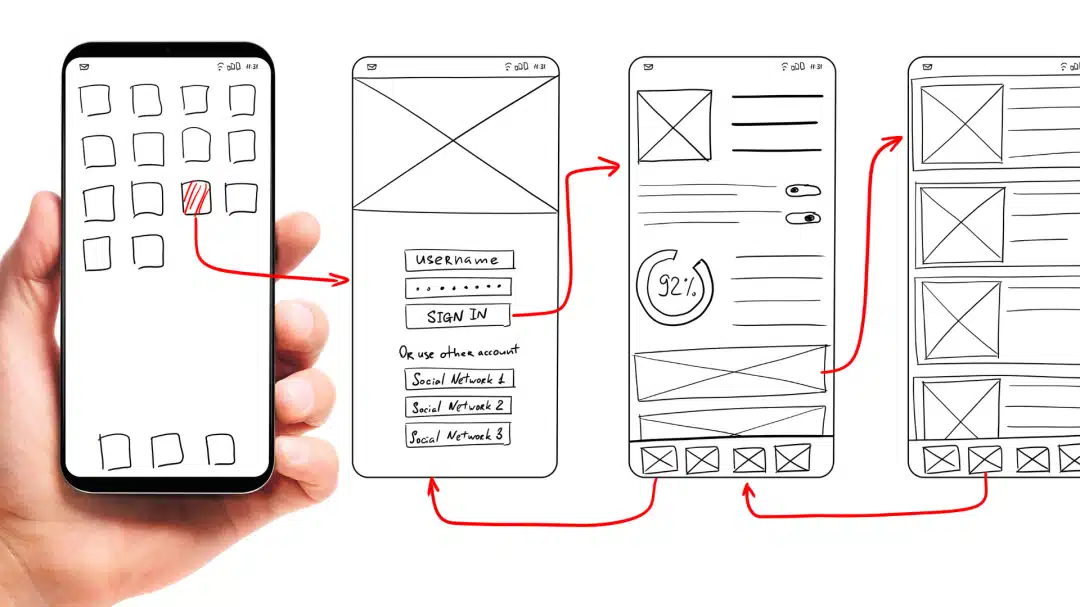
How are hybrid applications created?
Hybrid application development is all about getting the right mix of native and web development technologies to bring your application to life. In a traditional hybrid application, the core application code is written using HTML, CSS and JavaScript web technologies, which is then encapsulated in a container called a webview. More recently, new cross-platform application development frameworks, such as React Native, also allow JavaScript to be compiled into machine code for native performance.
Frameworks for hybrid apps

- React Native: Developed by Facebook, React Native compiles its code base into native code.
- Angular: Navigation is very dynamic and allows the creation of complex applications. Its creator is Google.
- Ionic: One of the most popular hybrid app development frameworks. It uses the traditional web view approach.
- Cordova: A single-page application (SPA) runs inside an embedded mobile web browser.
- Xamarin: Microsoft's answer to hybrid application development frameworks. You can write your applications in C#.
- Flutter: A newcomer to the hybrid application development scene. It uses the Dart programming language.

Other articles
Don't get left behind: if you want to keep up to date with the fast-moving technology sector, take a look at the following articles:

ChatGPT watermark in the EU: what it means for your firm
OpenAI is adding an invisible watermark to ChatGPT text in the EU. Why what matters for your business is who checks what you publish, not the mark itself.
Read more »
Meta's new AI agent for small businesses needs your data
Meta has launched Muse for Small Business, an AI agent that reads a company's own tools. Why well-organised business data matters more than the agent itself.
Read more »
Only 4.1% of Spain's industrial SMEs use AI: how to start
The IndesIA Barometer 2026 finds that just 4.1% of Spain's industrial SMEs use artificial intelligence. What it means and where to start.
Read more »Contact us
Do you have any questions? Would you like to schedule a call or a meeting? We would be happy to address any concerns and start working with you. The perfect digital solution for your business is just around the corner.
Subscribe to the newsletter
Discover the digital future by subscribing to our exclusive newsletter! Stay updated on the latest trends and developments in the world of technology. Don't miss the chance to be the first to learn about the innovations that are transforming the present! Subscribe now.